
NORFOLK QUESTIONS. REAL ANSWERS: Spending Real Money on Rising Water — Norfolk's Resilience Era
A $115 million federal grant, a transformed Ohio Creek watershed, and a city planning its shoreline around the water's rise. What Norfolk's flood spending has bought, and the questions it still has to answer.
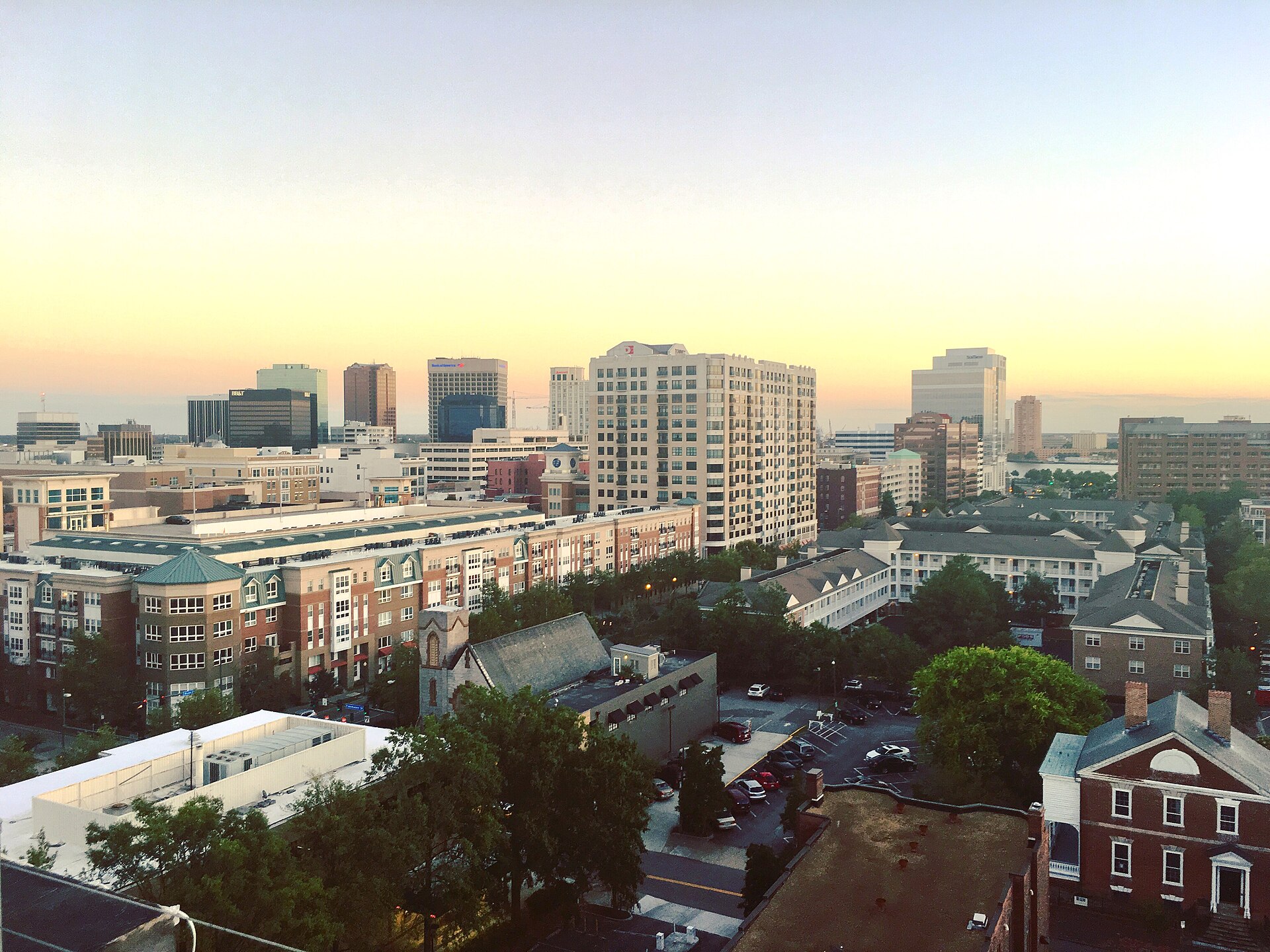
Norfolk's flood story has a before and after, and the dividing line is a check: in 2016 the city won $115 million in the federal National Disaster Resilience Competition — one of the largest such awards in the country — for the Ohio Creek watershed, the low-lying, historically Black communities of Grandy Village and Chesterfield Heights beside the Elizabeth River, where tidal and storm flooding had become a way of life.
What the money built is now the city's showpiece and its argument: a re-engineered watershed — a new Resilience Park with restored wetlands and living shorelines designed to hold and slow water, raised and reworked streets and stormwater systems, and a community hub — engineered openly for the flood as a recurring guest rather than a rare disaster. The design premise is the era's slogan in built form: live with water, because the water is not leaving.
The wider ledger is bigger and less finished. Norfolk's long-term coastal strategy envisions billions in defenses across decades — berms, walls, tide gates and raised ground from downtown to the naval station — prioritized through the city's sea-level planning work with the Army Corps of Engineers. The questions that follow the money are the serious ones: which neighborhoods get protected first and by what formula; how protection changes the protected neighborhoods' affordability; and whether the city's defenses and the Navy's — the base faces the same water — will be built to the same line.
Our verdict, from the documents and the ground: Ohio Creek is real — walk the park after a king tide and watch it work as designed — and it is a pilot, not a completion. Norfolk has done more planning and won more resilience money than almost any city its size in America. The water, arriving on schedule each fall, grades the work annually. The city has decided to be graded in public. That, more than any berm, is the resilience era's actual invention.